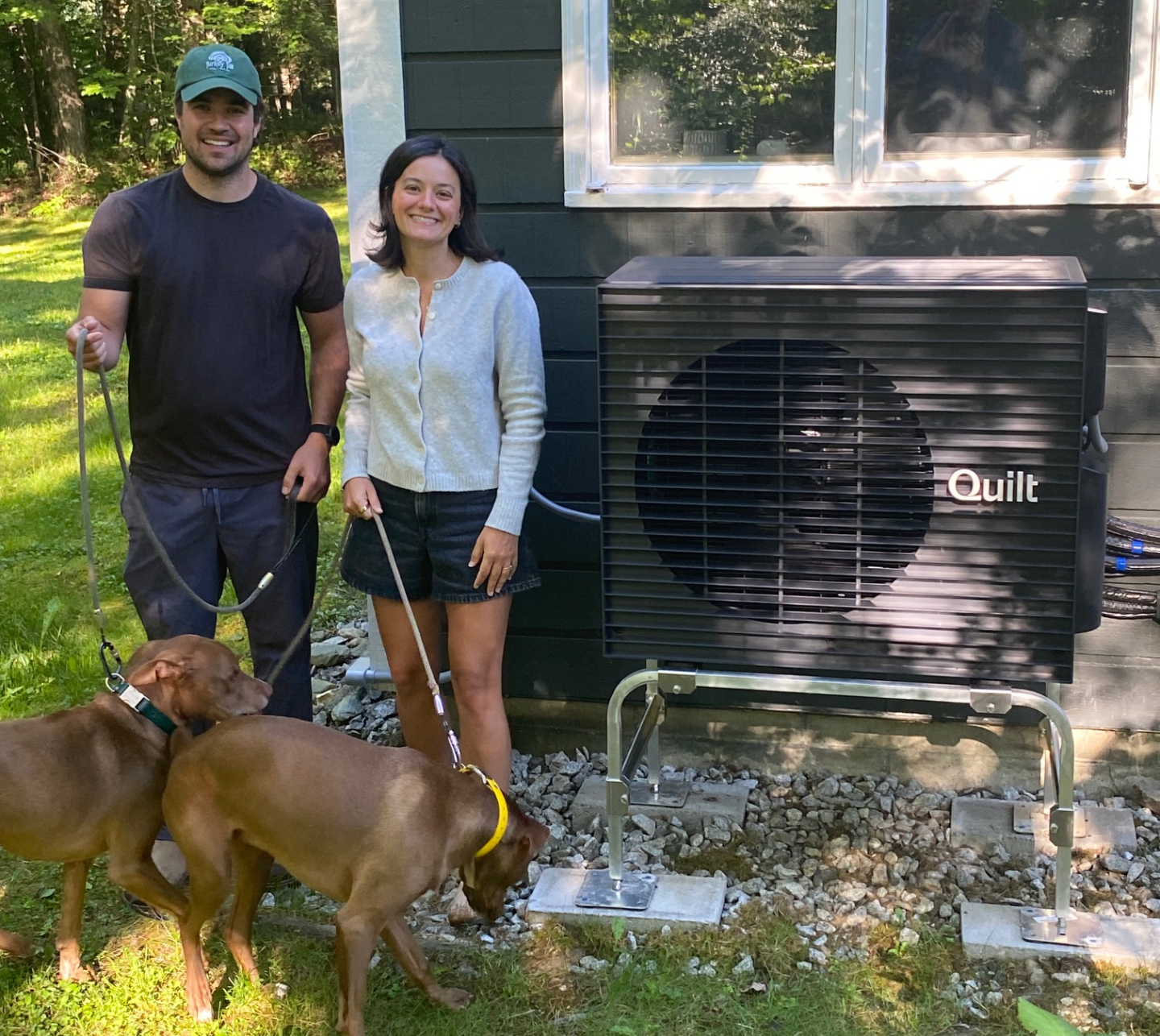
When Natalie and Dylan from Warren, VT began exploring ways to improve their home’s comfort and efficiency, they had two primary goals in mind: lower energy costs and greater comfort throughout the year.
Their home relied on only propane for heating and had no air conditioning. While the existing system provided warmth during Vermont’s cold winters, it wasn’t the most efficient option available, and increasingly warm summer temperatures were becoming harder to ignore.
As they researched potential solutions, they discovered Quilt Heat Pumps and quickly became interested in the combination of performance, efficiency, and modern design.
“Heat pumps were a two-birds-one-stone solution for heat and AC: more efficient heat in the colder months, and respite from the increasing number of 80+ degree days in the summer.”
Because Building Energy was the only Quilt-certified installer serving their area at the time, reaching out was an easy decision.
“We really wanted Quilt units, so Building Energy was an easy choice.”
Finding the Right Design and Attention to the Details
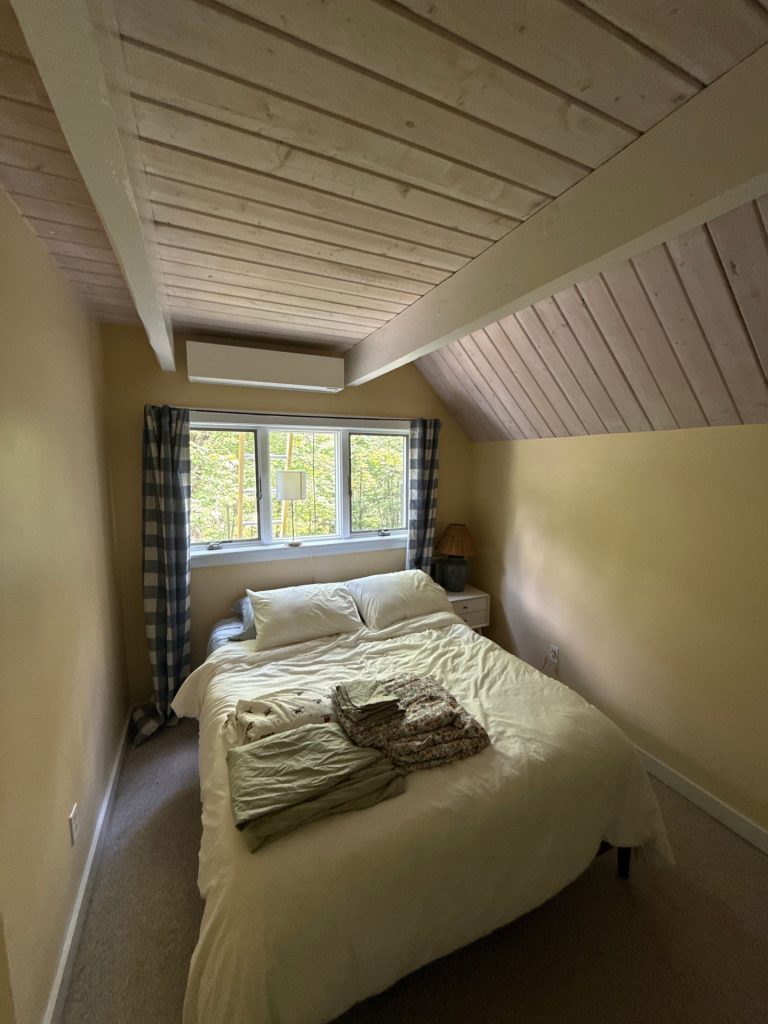
After meeting with one of Building Energy’s Heat Pump Project Managers Joel, Natalie and Dylan received several proposal options. Rather than presenting a one-size-fits-all solution, Joel developed multiple approaches to give them flexibility and help determine what would work best for their home. The conversation extended beyond heating and cooling performance. Natalie and Dylan wanted to ensure the finished installation would complement their home’s appearance as well. Joel explained how and where all the units would be mounted. Even Vermont’s winter conditions were considered, with equipment placement designed to avoid potential damage from snow shedding off the roof. These details may seem small, but they can make a big difference in the finished appearance of a heat pump installation.
With the design finalized, Natalie and Dylan were ready to move forward.
The Results
When the installation was complete, Natalie and Dylan immediately noticed the difference.
“When we walked into our home after the installation, it is no exaggeration to say that it felt like a different home. There is nothing like walking into a cooled-off house on a hot summer day!”
For a home that had never had air conditioning, the transformation was significant. Beyond the comfort of cooling, the new system will provide efficient heating throughout Vermont’s long winters while reducing reliance on propane. Natalie and Dylan were also pleasantly surprised by how much they appreciated the appearance of the Quilt units.
“They look so great—we love turning on the lights at night for the ambient lighting. We’re looking forward to using them for heating this winter.”
More Than Just New Equipment
One thing that stood out throughout the project was the overall experience of working with the Building Energy team.
“Working with Building Energy was a fantastic experience. From our project manager to the installers and electricians, the level of professionalism and attention to detail was unmatched. The job came out perfectly, and we couldn’t be happier. We are extremely grateful to the team for their excellent work.”

Interestingly, Joel had recently installed Quilt heat pumps in his own home as well. Having firsthand experience with the technology gave him additional confidence in recommending the system and helped him answer questions better throughout the process.
Ready for Every Vermont Season
As energy costs continue to fluctuate and Vermont summers become warmer, more homeowners are discovering the benefits of heat pumps. They provide efficient heating in the winter, reliable cooling in the summer, and can help reduce overall energy costs compared to traditional fossil-fuel heating systems.
By working closely with Building Energy to design a solution tailored to their home’s unique layout, they now have efficient heating, whole-home cooling, and a system that looks as good as it performs. And for homeowners considering a similar upgrade, their experience is a reminder that the right heat pump system can transform not just how a home is heated and cooled, but how it feels to live there.