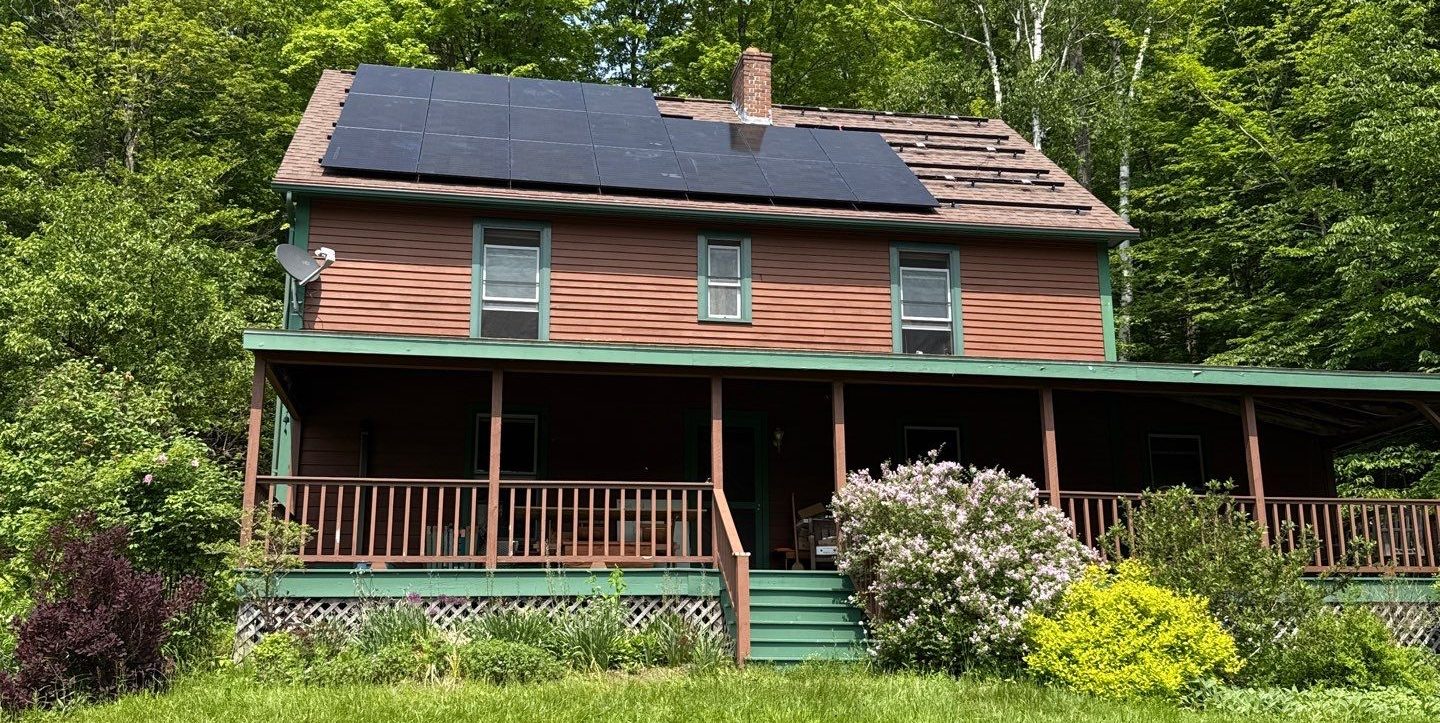
When this family finally closed on their new home, they had a clear goal—move it toward a cleaner, healthier, more resilient existence. They made a call that would shape the future of the house: they scheduled an energy audit with Building Energy. Our BPI Certified Auditors found several issues including insulation gaps, moisture concerns, ventilation needs, and evidence of rodent intrusion—especially in the attic and knee walls. Existing fiberglass insulation had been compromised and needed to be removed. In addition to the recommended thermal envelope improvements, our auditor suggested the home could benefit from new heat pumps. The homeowners also had plans to go solar.
Expanding the Focus: Comfort, Health and Durability
Once the energy audit was finished, rather than tackling everything we found at once, the plan was intentionally phased. The main challenge was that the house relied on an outdated patchwork of systems:
- An unbalanced heat pump setup
- Three propane-fired sealed combustion stoves
- An oil furnace dating back to the 1980s
While the setup worked, it wasn’t elegant or efficient. The existing heat pump configuration was a single outdoor condenser serving three indoor units, which led to uneven performance. With a main goal of reducing their reliance on fossil fuels, in addition to simplifying maintenance and improving comfort throughout the home, the homeowners worked together with Building Energy to develop a comprehensive approach.

- Remove the oil furnace to begin stepping away from fossil fuels.
- Rework the heat pump layout and install multiple high-efficiency heat pumps with single-head condensers —creating better balance and leading to improved efficiency.
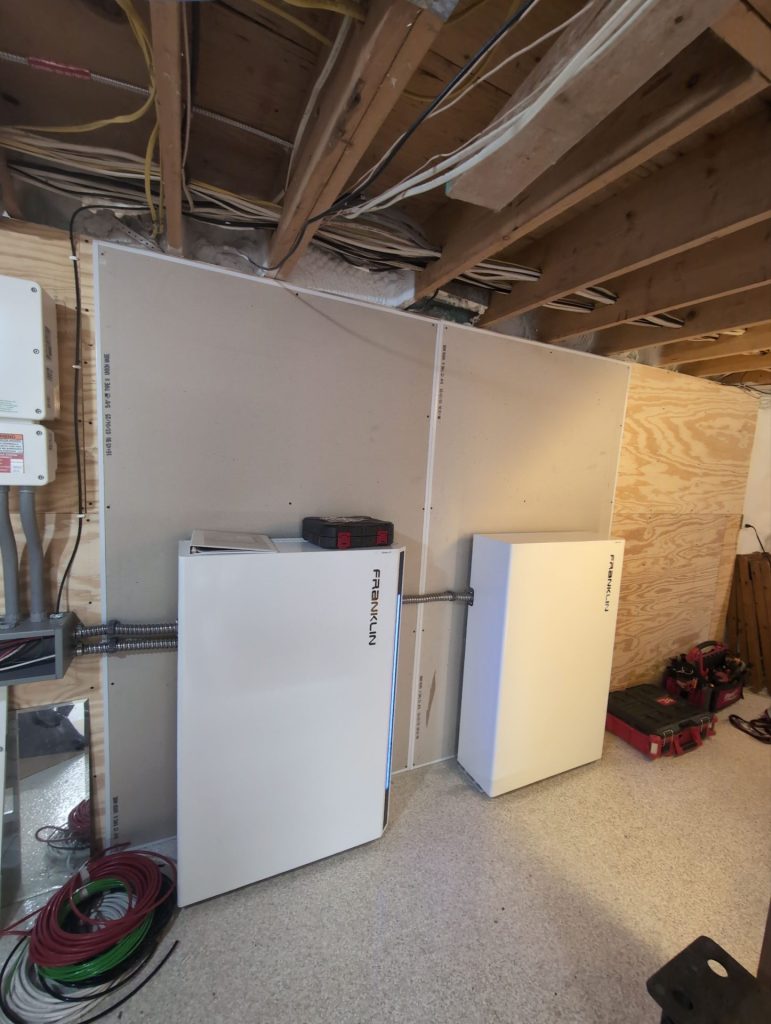
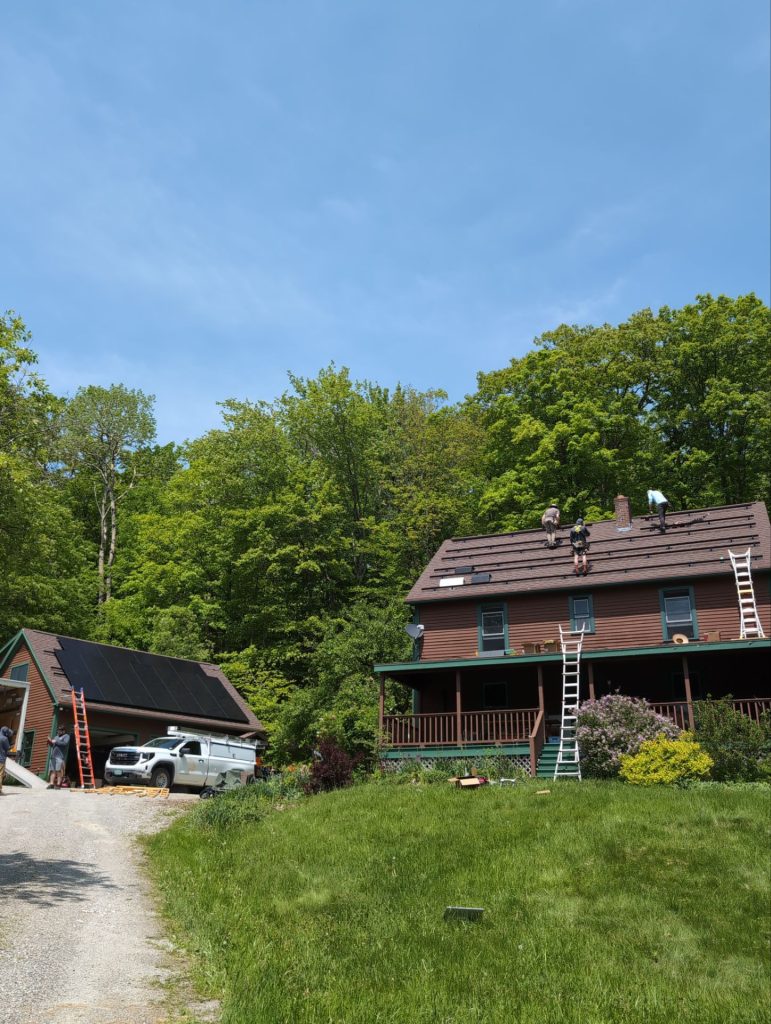
- Install a robust solar energy system (18.7 Kilowatts to be exact, installed in July of 2025), battery storage using two whole-home batteries providing resilience and backup power, and future electrification (August of 2025).
- A fully insulated and air-sealed building envelope which included:
- Rodent-resistant detailing
- Dense-pack cellulose insulation
- Phased insulation coordinated with ventilation upgrades
- Sound control where appropriate
Real Life, Real Challenges
Midway through the project, attic work paused for an unexpected but important reason: bats were discovered in the space.
Out of respect for wildlife, work stopped immediately. The homeowners installed bat houses and exclusion devices, ensuring the animals could relocate safely before construction resumed.
It was a reminder that high-performance projects still must adapt to real-world conditions—and values.
The Result: A Home Ready for What’s Next
Today, their home reflects careful planning and collaboration. Most importantly, the home is more comfortable, healthier, and easier to live in. This project wasn’t about a single product or upgrade—it was about treating the home as a whole system. By phasing improvements, coordinating across departments, and staying actively involved, these homeowners achieved a result that will serve them well for decades to come.